Every website consists of individual pages, but those pages are not meant to exist in isolation. Internal linking is the system that connects content together, helping users navigate information and helping search engines understand how pages relate to one another.
Without internal links, websites become collections of disconnected documents rather than organized sources of knowledge. Whether a website contains ten pages or ten thousand, internal linking plays a fundamental role in creating structure, improving navigation, and establishing relationships between content.
Understanding internal linking is essential because it affects how information is discovered, organized, and accessed across a website.
What Is Internal Linking?
Internal linking is the practice of creating hyperlinks that connect one page on a website to another page on the same website.
For example, an article about keyword research may include a link to a related article about search intent. Because both pages belong to the same domain, the connection between them is considered an internal link.
These links can appear in navigation menus, content sections, category pages, breadcrumbs, sidebars, and other areas of a website.
Unlike external links, which direct users to another website, internal links keep visitors and search engines within the same website environment.
Why Internal Links Exist
The internet is built on connections, and websites operate in a similar way.
A website may contain hundreds or even thousands of pages. Without links connecting those pages, users would struggle to move from one piece of information to another, and search engines would have difficulty discovering and understanding content.
Internal links exist to:
Connect related information
Help users navigate a website
Support content discovery
Provide context between pages
Establish relationships between topics
Create a logical website structure
In simple terms, internal links act as pathways that connect information throughout a website.
Why Internal Linking Has Always Been Important
Since the early days of search engines, links have been one of the primary ways content is discovered.
When search engine crawlers visit a website, they follow links to locate additional pages. This process allows search engines to expand their understanding of a site’s content and structure.
Although search engines have become far more sophisticated over time, internal links remain an important method for:
Modern search engines use many signals to evaluate websites, but internal linking continues to play a foundational role in how content is explored and interpreted.
How Search Engines Use Internal Links
Search engines rely on crawlers to discover and process content.
When a crawler lands on a page, it analyzes the content and follows available links to find other pages within the website.
As this process continues, search engines begin building a map of how pages connect to one another.
Internal links help search engines understand:
Which pages belong together
How information is organized
What topics are related
How users may navigate through content
The overall structure of a website
A well-connected website is generally easier for search engines to explore than one with isolated or disconnected pages.
How Internal Links Create Connections Between Pages
Internal links do more than provide navigation.
They create meaningful connections between pieces of content.
Imagine a page about keyword research linking to a page about search intent.
That single connection serves multiple purposes:
Users gain a pathway to additional information.
Search engines discover another relevant page.
The relationship between the two topics becomes clearer.
As more pages connect to one another, search engines can build a broader understanding of how information is organized across the website.
In this way, internal links function as signals that help establish context and relationships between pages.
Internal Linking Turns Individual Pages Into a Knowledge Network
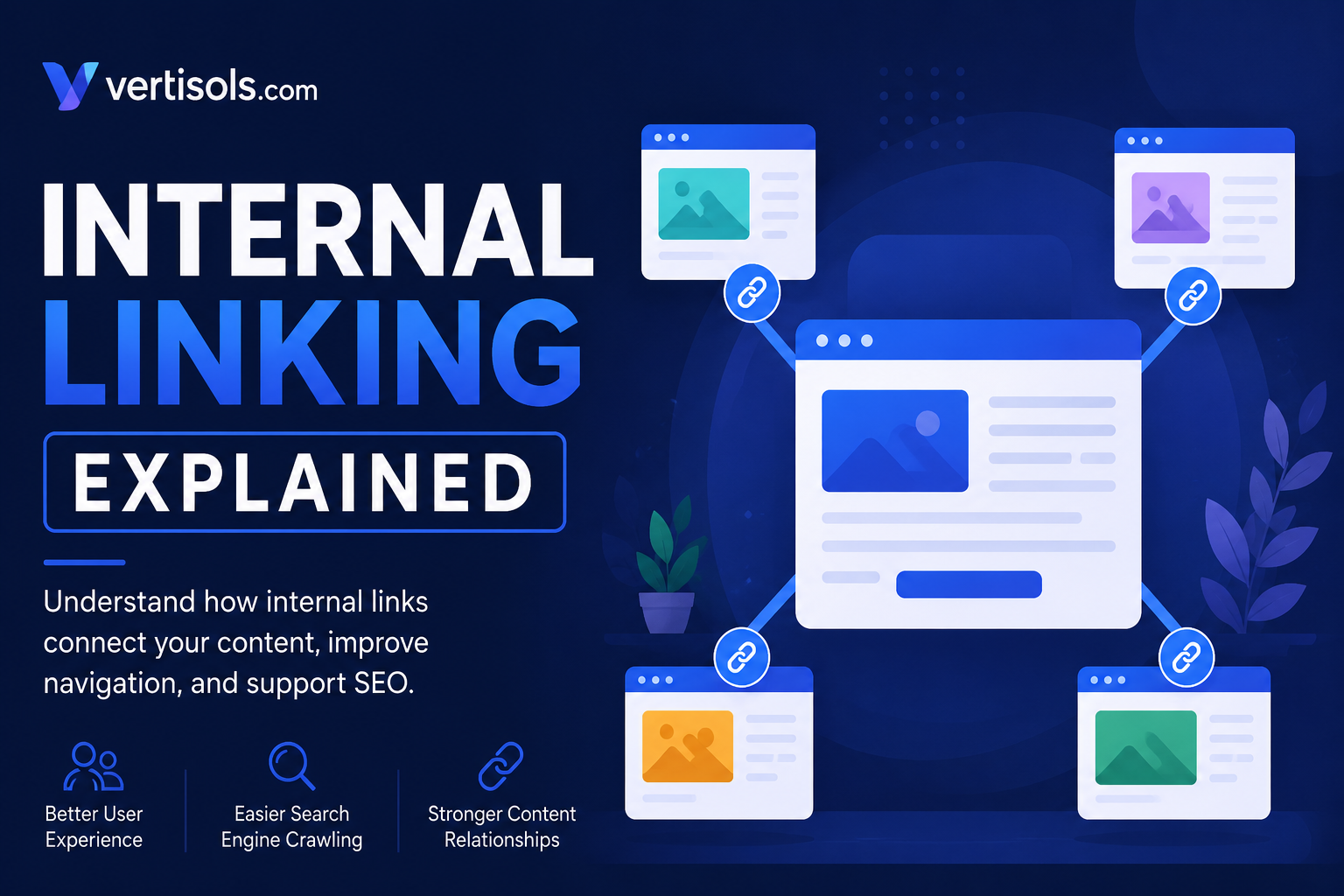
A useful way to think about internal linking is to imagine a website as a network rather than a collection of separate documents.
Without internal links:
Page A exists independently.
Page B exists independently.
Page C exists independently.
Each page contains information, but there is little indication of how those pages relate to one another.
With internal links:
Page A connects to Page B.
Page B connects to Page C.
Page C references related content elsewhere.
The website begins to function as a connected system of knowledge rather than a set of isolated resources.
This interconnected structure makes it easier for users to continue learning and easier for search engines to understand the website’s subject matter.
How Users Benefit From Internal Linking
Internal linking is often discussed from a search engine perspective, but its impact on users is equally important.
Visitors rarely stop after finding a single answer.
As they learn about a topic, they often have additional questions or want to explore related concepts.
Internal links help guide users toward relevant information without forcing them to return to a search engine.
For example, someone reading about keyword research may naturally want to learn about:
Search intent
Keyword mapping
Content optimization
Topic organization
Internal links create a smoother learning experience by helping users move naturally between related subjects.
Different Types of Internal Links
Internal links can appear in several forms throughout a website.
Navigation Links
Navigation links appear in menus and headers.
They help users access major sections of a website and contribute to overall site hierarchy.
Contextual Links
Contextual links appear within content.
These links connect readers directly to relevant information while they are actively engaged with a topic.
Breadcrumb Links
Breadcrumbs help users understand where a page sits within a website’s structure.
They also provide additional navigational pathways.
Footer Links
Footer links commonly point to important pages, categories, resources, or website sections.
Internal Links Help Define Content Relationships
One of the most valuable functions of internal linking is defining relationships between topics.
Consider a website containing articles about:
Search Intent
Keyword Research
Keyword Mapping
These topics are different, but they are closely related.
When pages connect through internal links, search engines can better understand that these concepts belong within the same broader subject area.
The links themselves help create context.
Rather than viewing each page as an isolated resource, search engines can interpret how topics connect within the website’s overall knowledge framework.
This relationship-building function is one reason internal linking remains important for content organization.
Internal Linking and Website Structure
Every website has a structure, whether intentionally designed or not.
Internal links contribute to that structure by connecting pages and helping establish pathways through content.
As websites grow, these connections help organize information into meaningful sections and categories.
A website focused on SEO education, for example, may contain content covering:
Keyword Research
On-Page SEO
Technical SEO
Content Strategy
Link Building
Internal links help connect related resources while maintaining clear boundaries between topics.
The result is a more organized experience for both users and search engines.
What Happens When Internal Linking Is Poor?
Weak internal linking can create challenges for both visitors and search engines.
Orphan Pages
An orphan page has little or no connection to other pages on a website.
As a result, it may be difficult for users and search engines to discover.
Fragmented User Journeys
Visitors may find useful information but struggle to locate the next relevant resource.
Weak Topic Connections
Related content may appear disconnected, making it harder to understand how topics relate to one another.
Discovery Challenges
Important content can remain buried within a website if there are insufficient pathways leading to it.
Common Misconceptions About Internal Linking
Internal Links Exist Only for SEO
Internal links support search engines, but they also improve navigation, usability, and information discovery.
More Internal Links Are Always Better
The value of an internal link depends on relevance and context rather than sheer quantity.
Navigation Menus Are Enough
Navigation links help establish structure, but contextual links often provide deeper content relationships.
Internal Linking Is a One-Time Task
As websites grow and new content is published, new linking opportunities naturally emerge.
Signs of a Well-Connected Website
A website generally has strong internal connectivity when:
Related content is easy to discover
Important pages are accessible
Users can move naturally between topics
Information is organized logically
Search engines can navigate content efficiently
Topic relationships are clear
These characteristics help create a more useful and understandable website.
Internal Linking in a Topic Cluster Environment
Many modern websites organize content around broader subject areas.
In these environments, internal links help connect related resources while allowing each page to remain focused on its specific topic.
Rather than repeating information across multiple articles, websites can use internal links to guide readers toward supporting content when additional context is needed.
This creates a stronger knowledge ecosystem while preserving topical focus.
Final Thoughts
Internal linking is far more than a navigation feature.
It is the framework that connects information across a website, helping users discover content and helping search engines understand how pages relate to one another.
By creating pathways between pages, internal links transform isolated documents into connected resources. They establish relationships between topics, contribute to website structure, support content discovery, and help organize information into a coherent system.
Viewed from this perspective, internal linking is not simply about moving from one page to another. It is about creating a connected body of knowledge that is easier to explore, understand, and maintain over time.
Frequently Asked Questions
What is an internal link?
An internal link is a hyperlink that points from one page on a website to another page on the same website.
How are internal links different from external links?
Internal links connect pages within the same website, while external links point to pages on other websites.
Why do search engines follow internal links?
Search engines use internal links to discover pages, navigate website structures, and understand relationships between content.
What is an orphan page?
An orphan page is a page that has little or no connection to other pages through internal links, making it more difficult to discover.
How many internal links should a page have?
There is no universal number. The appropriate amount depends on the page’s purpose and the availability of genuinely relevant content that can help users continue their journey.
Can too many internal links be confusing?
Yes. Excessive linking can make content harder to read and may overwhelm users. The goal is to create meaningful connections rather than adding links unnecessarily.
What is the difference between navigation links and contextual links?
Navigation links help users move between major sections of a website, while contextual links appear within content and connect related information directly.
Are internal links important for large websites?
Yes. As websites grow, internal links become increasingly important for helping users and search engines navigate large amounts of content efficiently.


3 Comments
[…] Internal links connect one page on your blog to another relevant page on the same website. […]
[…] Internal linking plays a supporting role here too. Linking related products, "customers also bought" sections, and category-to-subcategory links all help distribute relevance throughout the site. […]
[…] Related SEO Guides 01 What Is SEO? Learn the fundamentals of search engine optimization. Read Guide → 02 Short-Tail vs Long-Tail Keywords Understand search specificity and conversational queries. Read Guide → 03 Internal Linking Explained See how internal links connect related pages and guide users. Read Gu… […]